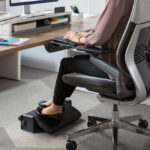
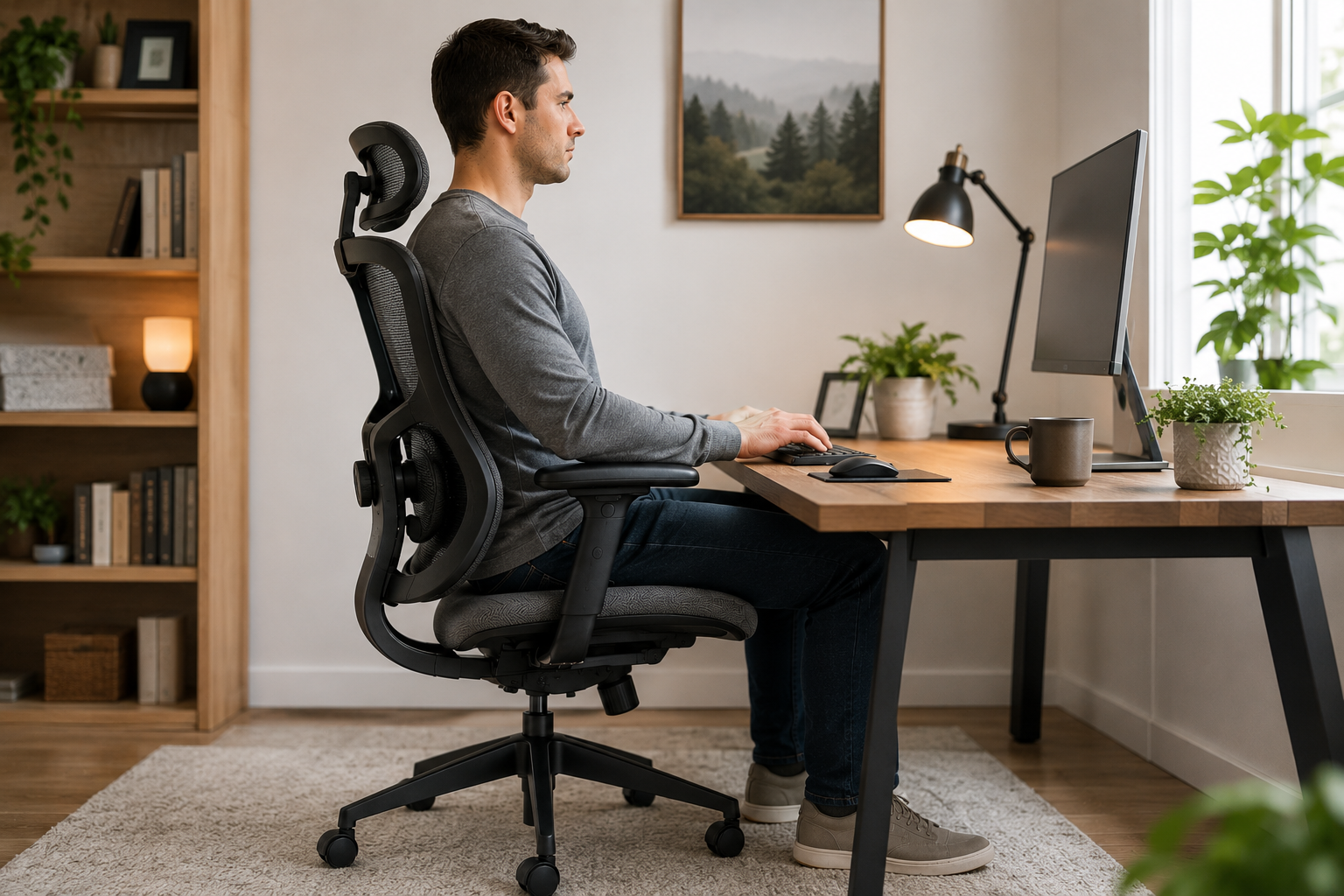
Finding the best office chairs for lower back pain is one of the most searched topics among remote workers and office professionals, and for good reason. Lower back pain from sitting affects millions of people daily, and the chair is almost always part of the problem.
This guide cuts through that noise. Every chair here was chosen based on its actual lumbar support mechanism, adjustability range, and verified back pain relief credentials, not just marketing claims. We cover options from under $200 all the way to $500, so you can find the right fit for your body and your budget without overspending or undershooting.
If you want to understand the research behind why certain chair features actually reduce back pain before diving into specific picks, our guide on whether ergonomic chairs actually help back pain covers the clinical evidence in detail.
Quick Recommendations
- Best Overall for Lower Back Pain: Hbada E3 Pro 2026 Edition
- Best Under $200: SIHOO M57 Ergonomic Mesh Office Chair
- Best Budget Pick: SIHOO M18 Ergonomic Office Chair
- Best Mid-Range: FlexiSpot C7 Premium Ergonomic Office Chair
- Best for All-Day Sitting: Hbada E3 Air Ergonomic Office Chair
What Actually Helps Lower Back Pain in an Office Chair
Before getting into specific picks, it is worth being direct about which features the research actually supports for lower back pain relief, because a lot of chairs are marketed with features that sound good but make no measurable difference.
Dual-adjustable lumbar support is the single most important feature. A lumbar system that moves both vertically (up and down) and horizontally (in and out) lets you position support at the exact height and depth of your lumbar curve. Your spine is unique in both dimensions, and a chair that only adjusts on one axis is guessing at the other. Dynamic lumbar systems that move with your body as you shift position take this further, maintaining support contact even when you lean slightly forward or back during the day.
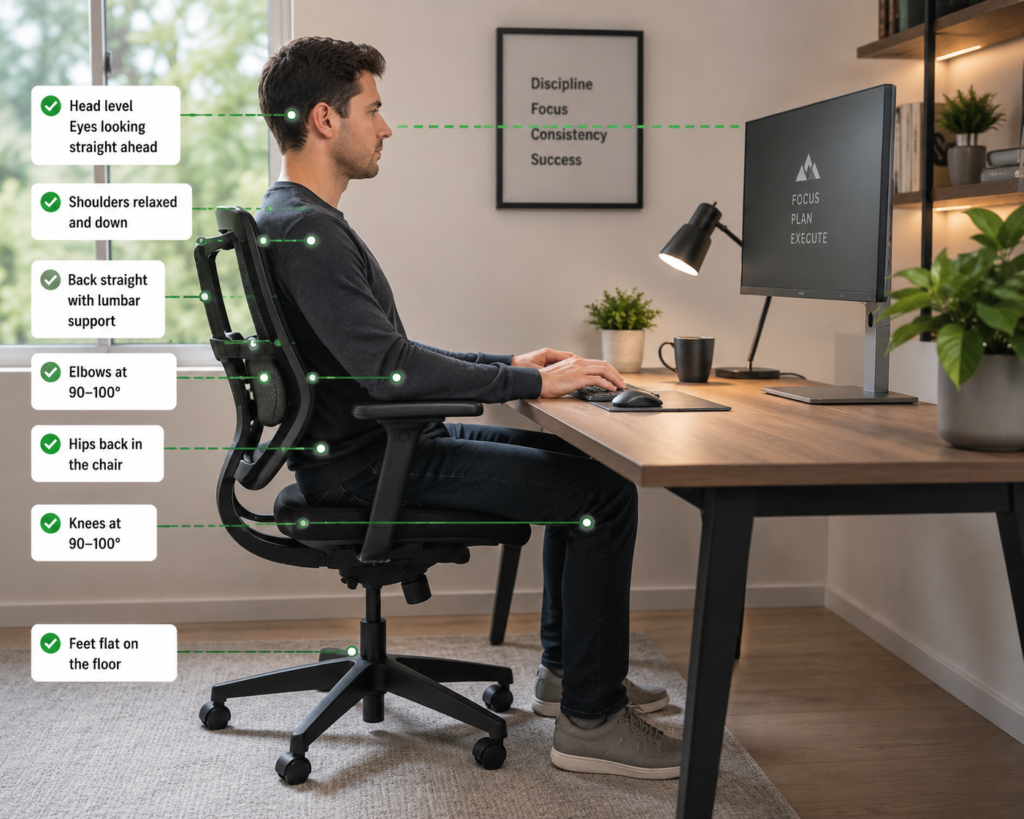
Seat height adjustment that actually fits you. The entire chain of spinal alignment starts with seat height. If your feet are not flat on the floor with knees at roughly 90 degrees, your pelvis tilts in ways that either flatten or exaggerate your lumbar curve before the lumbar support even comes into play. Get this right first.
A real recline range. Research confirms that sitting at exactly 90 degrees increases intradiscal pressure in the lumbar spine compared to a slight backward lean of 100 to 110 degrees. A chair with a lockable recline in that range reduces the compressive load on your lumbar discs during long sitting periods. Chairs that only lock upright deny you this benefit.
Seat depth that matches your thigh length. A seat too deep cuts into the back of your thighs and forces you to either perch at the edge or slouch to reach the backrest, both of which compromise the lumbar support entirely. Seat depth adjustment, or a seat appropriately dimensioned for your body, is more important for back health than most people realise.
Breathable materials. Heat buildup during long sessions increases muscle tension and discomfort. Full mesh construction breathes significantly better than foam and leatherette alternatives, which matters most during afternoon sessions in warmer environments.
As OSHA’s ergonomic workstation guidelines confirm, lumbar support should maintain the spine’s natural inward curve during extended sitting. The chairs on this list address that objective at different price points and with different mechanisms.
Hbada E3 Pro 2026 Edition — Best Overall for Lower Back Pai
The Hbada E3 Pro 2026 Edition is the most comprehensively engineered chair on this list for lower back pain specifically. It is the fourth-generation iteration of Hbada’s flagship ergonomic chair, developed based on feedback from over 100,000 verified users, and the improvements are targeted directly at the pain points that chair reviews consistently flag: lumbar precision, armrest stability, and long-session support consistency.
The 3-Zone Floating Lumbar Support system is the standout feature. It adjusts in eight directions including forward and backward, up and down, and wing rotation, covering both the position and the depth of your lumbar curve with more precision than any other chair on this list. The bio-synchronized side wings rotate 40 degrees internally and externally, meaning the support wraps around your lower back rather than pressing against a single point. For users who have tried multiple chairs and found the lumbar support either too high, too low, too aggressive, or too passive, the E3 Pro’s eight-way system gives you a realistic chance of finding the exact position that works.
The 720-degree armrests are the other major differentiator. They maintain their position relative to your body as you recline, which means your elbows stay supported through the full range of movement rather than losing contact when you lean back. This matters for lower back pain because unsupported arms create shoulder tension that compounds lower back strain.
It is certified by IGR, BIFMA, SGS, and TUV, carries a 3-year warranty with 30-day returns, and has earned a 98% positive rating across over 3,000 reviews on Amazon since its March 2026 US launch.
Key features:
- 3-Zone Floating Lumbar Support with 8-way adjustment
- 720-degree synchronized armrests
- CloudMesh seat for breathability and pressure distribution
- 4D biaxial headrest (70-degree rotation, height and depth adjustable)
- 4-mode recline: 100, 115, 125, and 140 degrees
- Seat depth adjustment
- 330-pound weight capacity
- Suitable for users 5’1″ to 6’5″
- IGR, BIFMA, SGS, and TUV certified
- 3-year warranty, 30-day free returns
Pros:
- Most comprehensive lumbar adjustability of any chair on this list
- 720-degree armrests maintain support through recline, addressing shoulder and neck tension simultaneously
- CloudMesh breathes well during long sessions
- Footrest included for full decompression during breaks
- Strong independent certification stack
- 30-day in-home trial removes purchase risk
Cons:
- Sits at the top of the budget range on this list
- 4th generation model is new to the US market so long-term durability data is still building
- Premium price means it requires confidence in the brand before purchasing
Who it’s best for: Remote workers and office professionals sitting six or more hours daily who have tried budget ergonomic chairs and found the lumbar support insufficient or imprecise. The eight-way lumbar system is specifically built for users with lower back pain rather than general users who want comfort.
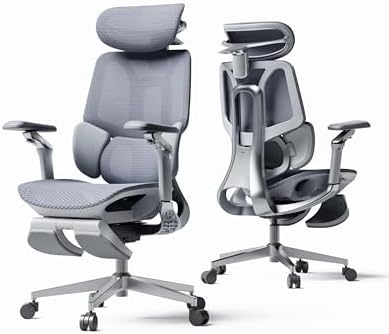
- DYNAMIC 3-ZONE LUMBAR SUPPORT: Adapts instantly to your posture using gravity—no electrical mechanisms needed. The later…
- UPGRADED 4D DUAL-AXIS HEADREST: Offers micrometer-level adjustment with 70mm depth, 40mm height, and 70° rotation. It pr…
- ADAPTIVE RECLINE UP TO 140°: Seamlessly transition between deep focus (105°), working (115°), relaxing (130°), and resti…
SIHOO M57 Ergonomic Mesh Office Chair — Best Under $200
The SIHOO M57 has become the most consistently recommended sub-$200 ergonomic chair for lower back pain across independent review communities, and the reason is straightforward. It delivers the two features that actually matter most for back pain relief, dual-adjustable lumbar support and 3D armrests, at a price point where most competitors still use fixed lumbar pads.
The dual-axis lumbar adjusts both up and down for height and in and out for depth. That combination matters because it lets you match the lumbar support to your specific spine rather than leaving one dimension to chance. Combined with a full mesh back and seat for breathability, 3D armrests for shoulder decompression, and a BIFMA-certified 330-pound frame with a published test report, the M57 offers genuine ergonomic credentials rather than just ergonomic labelling.
For a detailed breakdown of everything the M57 gets right and wrong, our full SIHOO M57 review covers the chair in depth including who it suits best.
Key features:
- Dual-adjustable lumbar (height and depth)
- 3D adjustable armrests (height, forward/back, pivot)
- Full mesh back and seat
- Adjustable headrest (height and tilt)
- 90 to 126 degree recline with tilt lock
- 330-pound weight capacity
- BIFMA and SGS certified with published test report
- 3-year warranty
Pros:
- Dual-axis lumbar at under $200 is genuinely rare in this category
- Full mesh construction keeps the chair cooler than foam alternatives
- BIFMA test report is publicly available, not just claimed
- Strong established review base for long-term confidence
- 3D armrests reduce shoulder tension that contributes to back strain
Cons:
- Recline range tops at 126 degrees, less than premium alternatives
- No seat depth adjustment on the standard model
- Headrest sits slightly high for users under 5’5″
Who it’s best for: Home office users on a budget who want genuine lumbar adjustability without spending $300 or more. The best value entry point for lower back pain relief on this list.

- ADJUSTS TO YOU, FROM BOTTOM TO TOP – Whether you’re working, gaming, or just relaxing, SIHOO ergonomic chair adapts to y…
- ERGONOMIC SUPPORT WHERE YOU NEED IT MOST – Recommended by the Ergonomics Application Association, the SIHOO ergonomic of…
- STABLE, DURABLE, AND QUIET – Built with a reinforced aluminum base and a dual-frame backrest, our desk chair holds up to…
SIHOO M18 Ergonomic Office Chair — Best Budget Pick
The M18 is the M57’s predecessor and still holds its own as the most affordable chair on this list with real lumbar adjustability. It shares the same dual-axis lumbar support system as the M57, adjusting in both height and depth, and adds a wide contoured seat and high-back coverage from lumbar through upper back and neck. Over 16,000 Amazon reviews with consistently high ratings is one of the larger verified feedback pools in this category.
The main trade-off compared to the M57 is the armrest system. The M18 uses 2D armrests that adjust in height only, compared to the M57’s 3D system. For users whose back pain is primarily lumbar rather than involving neck and shoulder strain, this is a reasonable compromise for the price saving.
Key features:
- Dual-adjustable lumbar (height and depth)
- High-back design with adjustable headrest
- Wide contoured foam seat
- 2D armrests (height only)
- 330-pound weight capacity
- BIFMA certified
- 3-year warranty
Pros:
- Dual-axis lumbar at the lowest price point on this list
- High-back design covers lumbar through upper back and neck
- Wide seat accommodates a broader range of body types
- Over 16,000 verified reviews provide strong long-term confidence
- Machine washable seat cushion cover
Cons:
- 2D armrests are more limited than 3D options for shoulder support
- Foam seat retains more heat than full mesh alternatives
- No seat depth adjustment
Who it’s best for: Budget-conscious remote workers or anyone setting up their first proper ergonomic chair whose primary concern is lumbar support rather than comprehensive armrest adjustability. The best price-to-lumbar-support ratio on this list.

- 【ERGONOMICE OFFICE CHAIR】- The ergonomic chair provides 4 support points (head/back/hip/hands) and proper lumbar support…
- 【For Home and Work】 SIHOO chairs can be applied in different scenarios according to the needs of different consumers in …
- 【Breathable Mesh】 Mesh Office Chair Premium Backrest features flexible non-pattern mesh fabric while keeping your back c…
FlexiSpot C7 Premium Ergonomic Office Chair — Best Mid-Range
The FlexiSpot C7 sits between the budget SIHOO options and the premium Hbada E3 Pro, and it fills that mid-range slot with a combination of dynamic lumbar support, adjustable seat depth, and a 135-degree recline range that none of the sub-$200 chairs on this list match. The dynamic lumbar system is the key differentiator at this price point. Rather than a static pad you adjust once and leave, it tracks your movement within a range, maintaining contact with your lower back as you shift forward to type or lean back to think. For users whose back pain gets worse as a session progresses rather than immediately, this kind of responsive support often addresses the problem more effectively than a static adjustment.
The full mesh construction, 3D armrests, and adjustable seat depth round out a well-considered feature set for home office users who sit for extended periods. FlexiSpot is primarily known for standing desks, and the C7 reflects the same attention to ergonomic function that their desk line is known for. For standing desk recommendations that pair well with any chair on this list, our best standing desk under $300 guide covers the options most suited to an ergonomic home office setup.
Key features:
- Dynamic lumbar support that tracks movement
- Seat depth adjustment
- 135-degree recline with multiple lock positions
- 3D adjustable armrests
- Full mesh back and seat
- Adjustable headrest
- 300-pound weight capacity
- 3-year warranty
Pros:
- Dynamic lumbar maintains contact as you shift position, not just when stationary
- Seat depth adjustment accommodates a wider range of body proportions
- 135-degree recline is deeper than the sub-$200 options
- Full mesh construction breathes well during long sessions
- FlexiSpot brand reputation for ergonomic build quality
Cons:
- 300-pound weight capacity is lower than the SIHOO and Hbada options
- Sits at a higher price point than the SIHOO models
- Dynamic lumbar has a smaller adjustment range than the Hbada E3 Pro’s 8-way system
Who it’s best for: Remote workers and hybrid professionals who sit for five to eight hours and find that static lumbar support becomes inadequate as they naturally shift position throughout the day. The dynamic lumbar system is the right upgrade from a fixed-adjustment chair.

- Customizable Comfort: Featuring adjustable seat depth (17″-20″), height (19.3″-22.6″), and tilt functions to ensure a pe…
- Enhanced Ergonomics: Dynamic lumbar support and a headrest adjustable in height and tilt provide superior back and neck …
- 3D Armrests: Fully adjustable armrests (height, forward/back, and swivel) allow for precise positioning to reduce arm st…
Hbada E3 Air Ergonomic Office Chair — Best for All-Day Sitting
The Hbada E3 Air is the entry point into the Hbada ergonomic ecosystem and shares the same multi-zone support philosophy as the E3 Pro at a lower price. The T-Shape Support System addresses neck, shoulder, and lower back simultaneously, which matters for all-day sitters who carry tension across multiple areas rather than in one isolated zone. The 8-way elastic lumbar adjusts in height, depth, and side wing rotation, providing broader lumbar contact than a standard single-point pillow.
The 140-degree recline range and retractable footrest enable a genuine decompression position during breaks, where reclining past 120 degrees with feet elevated takes meaningful pressure off the lumbar discs in a way that simply leaning back in an upright chair cannot achieve. For users whose back pain specifically worsens after four or more hours of sitting, this break position can meaningfully extend comfortable sitting time.
Key features:
- T-Shape Support System covering neck, waist, and shoulder zones
- 8-way elastic lumbar support (height, depth, and 40-degree wing rotation)
- 140-degree recline with footrest
- 3D biaxial headrest (70-degree rotation, 1.8-inch height adjustment)
- 3D adjustable armrests
- Adjustable seat depth (1.97 inches)
- 300-pound weight capacity
- BIFMA, SGS, and IGR certified
- 3-year warranty, 30-day returns
Pros:
- 140-degree recline with footrest enables proper lumbar decompression during breaks
- T-Shape multi-zone support addresses neck and shoulder pain alongside lower back
- 8-way lumbar adjustment covers a wide range of body types
- 3D headrest and armrests add upper body support that compounds back pain relief
- Strong certification stack for a chair in this price range
Cons:
- Dynamic lumbar is less precise than the Hbada E3 Pro’s 8-way floating system
- 300-pound weight capacity is the lowest on this list
- Newer brand with less long-term review history than SIHOO
Who it’s best for: All-day sitters who experience back pain that builds gradually through the day rather than immediately. The combination of multi-zone support and a 140-degree recline with footrest addresses both the cause (inadequate lumbar support during work) and the relief (proper decompression during breaks).

- 𝐈𝐧𝐧𝐨𝐯𝐚𝐭𝐢𝐯𝐞 𝐄𝐫𝐠𝐨𝐧𝐨𝐦𝐢𝐜 𝐎𝐟𝐟𝐢𝐜𝐞 𝐜𝐡𝐚𝐢𝐫: Hbada E3 Air ergonomic office chair combines the latest technologies to help you main…
- 𝐓-𝐒𝐡𝐚𝐩𝐞 𝐒𝐮𝐩𝐩𝐨𝐫𝐭 𝐒𝐲𝐬𝐭𝐞𝐦: Hbada E3 Air ergonomic chair’s T-Shape Support System is originally created by Hbada. It solves …
- 𝐓𝐡𝐫𝐞𝐞-𝐳𝐨𝐧𝐞 𝐄𝐥𝐚𝐬𝐭𝐢𝐜 𝐋𝐮𝐦𝐛𝐚𝐫 𝐒𝐮𝐩𝐩𝐨𝐫𝐭: The lumbar support of Hbada E3 Air desk chair makes sure a large wrap around the wais…
How These Chairs Compare for Lower Back Pain
| Chair | Lumbar Type | Recline Range | Seat Depth Adj. | Armrests | Weight Capacity | Price Range |
|---|---|---|---|---|---|---|
| Hbada E3 Pro 2026 | 8-way floating, 3-zone | 100–140° | Yes | 720° synchronized | 330 lbs | ~$430–$500 |
| SIHOO M57 | Dual-adjust (height + depth) | 90–126° | No | 3D | 330 lbs | ~$179–$199 |
| SIHOO M18 | Dual-adjust (height + depth) | 90–120° | No | 2D (height only) | 330 lbs | ~$149–$169 |
| FlexiSpot C7 | Dynamic tracking | 90–135° | Yes | 3D | 300 lbs | ~$249–$299 |
| Hbada E3 Air | 8-way elastic, 3-zone | 90–140° | Yes (1.97″) | 3D | 300 lbs | ~$179–$199 |
For lumbar precision: The Hbada E3 Pro 2026 leads with its 8-way floating system. The SIHOO M57 and M18 are the strongest budget options with genuine dual-axis adjustment. The FlexiSpot C7’s dynamic tracking addresses the movement problem that static lumbar pads cannot.
For all-day sessions: The Hbada E3 Air and E3 Pro both offer seat depth adjustment and recline past 135 degrees, which significantly outperforms the budget options for extended sitting.
For value: The SIHOO M57 offers the best lumbar adjustability to price ratio. The SIHOO M18 is the entry point for genuine dual-axis lumbar support.
Which Chair Should You Choose for Lower Back Pain?
If budget is the primary constraint, the SIHOO M18 gives you dual-axis lumbar support at the lowest price on this list. For most users upgrading from a chair with no real lumbar adjustment, this alone will produce a noticeable improvement.
If you want the best balance of features and price, the SIHOO M57 adds 3D armrests and full mesh construction over the M18 for around $30 more. The armrest upgrade matters for lower back pain because shoulder tension from unsupported arms compounds lumbar strain over long sessions.
If your back pain builds gradually through the day, the FlexiSpot C7’s dynamic lumbar support maintains contact as you shift position, which is more effective than a static adjustment for users who naturally move around while working.
If you sit for six or more hours and want comprehensive multi-zone support, the Hbada E3 Air covers neck, shoulder, and lower back simultaneously, and its 140-degree recline with footrest allows proper lumbar decompression during breaks.
If lower back pain is your primary health concern and budget is secondary, the Hbada E3 Pro 2026 Edition’s 8-way floating lumbar system is the most targeted and precise solution on this list for back pain relief.
Whichever chair you choose, pairing it with a properly set up workspace makes a significant difference. A lumbar support pillow can supplement any of these chairs where additional targeted support is needed — our best lumbar support pillow guide covers the options that stay in position reliably. An ergonomic footrest also supports the sitting chain from below — our best ergonomic footrest guide covers the options most suited to home office use.
Mayo Clinic’s office ergonomics guidance consistently recommends treating seating, desk height, monitor position, and movement frequency as a connected system rather than addressing any single element in isolation. A great chair is the foundation, not the complete solution.
Frequently Asked Questions
What is the best office chair for lower back pain? The best chair depends on your budget and how severe your back pain is. For comprehensive back pain relief, the Hbada E3 Pro 2026 Edition’s 8-way floating lumbar system is the most targeted option on this list. For the best balance of lumbar support and price, the SIHOO M57 delivers dual-axis lumbar adjustment at under $200.
What lumbar support features actually help with lower back pain? Dual-adjustable lumbar support that moves in both height and depth is the most evidence-backed feature for lower back pain relief. This allows the support to match your specific lumbar height and curve depth rather than approximating an average position. Dynamic lumbar systems that track your movement add further benefit for users who shift position throughout the day.
How long before an ergonomic chair helps with back pain? Most clinical research measures outcomes over four to six weeks of regular adjusted use. Initial adaptation to a new chair takes one to two weeks. Give any chair a minimum of three weeks of daily use with proper adjustments before assessing whether it is making a difference.
Is a $500 office chair worth it for back pain compared to a $200 one? For users sitting six or more hours daily with significant back pain, yes. The Hbada E3 Pro 2026 Edition at around $480 to $500 offers lumbar precision and adjustment range that genuinely cannot be matched at $200. For users sitting three to five hours, the SIHOO M57’s dual-axis lumbar provides strong value at under $200 without needing the premium investment.
Can I add lumbar support to my existing chair instead of buying a new one? Yes, a quality lumbar support pillow can meaningfully improve any chair’s lower back support. Our best lumbar support pillow guide covers the options that hold their position reliably. However, if your existing chair has structural problems like a collapsed seat or no height adjustment, a pillow cannot fix those underlying issues.
Does chair material affect lower back pain? Indirectly. Full mesh construction breathes better than foam and leatherette, which reduces heat buildup during long sessions. Heat retention increases muscle tension and discomfort that compounds lower back pain over time. For users in warmer environments or who run hot, full mesh chairs like the SIHOO M57 and Hbada E3 Air provide a meaningful comfort advantage.
Final Thoughts
Lower back pain from sitting is a real and addressable problem. The chairs on this list cover a range that goes from the most accessible entry point for genuine lumbar support all the way to the most precisely adjustable mechanism available under $500.
The key insight from the research is consistent: adjustable lumbar support that matches your specific spine is worth far more than any amount of padding, styling, or brand name. A chair with dual-axis lumbar adjustment fitted correctly to your body will outperform an expensive chair with a fixed lumbar pad used without adjustment.
For most home office users, the SIHOO M57 is the most defensible starting point. For users whose lower back pain is persistent and severe, the Hbada E3 Pro 2026 Edition is the most targeted solution without crossing into the four-figure price bracket.
For more help building a complete ergonomic setup around your chair choice, our do ergonomic chairs actually help back pain guide covers the clinical research, and our best office chairs under $300 roundup provides additional options if none of the picks above quite fit your needs.
Note: Pricing varies by color, variant, and current promotions on Amazon. Always verify current prices before purchasing. Some links on this page are affiliate links.